
Supply chain & logistics
Forecasting, routing, inventory, exceptions.
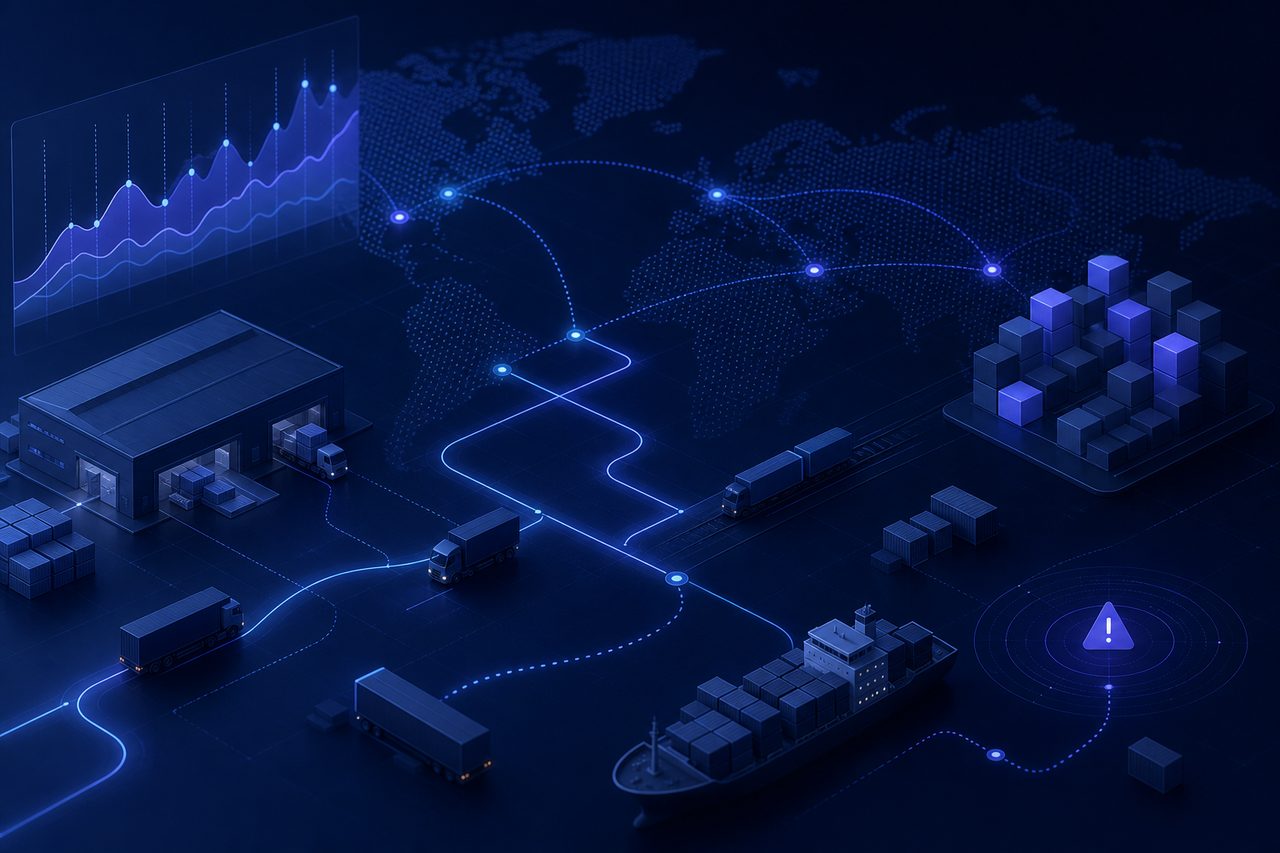
Supply chain work runs on forecasts, routes, and exceptions. AI is useful in every one of those, but the kind of AI that helps is rarely the kind that gets written about in industry magazines.
Forecasting is the most common entry point. Demand forecasting, inventory forecasting, capacity forecasting. The goal is usually to replace a spreadsheet that a senior planner updates every week with a model that uses the same data the planner would use but runs every night. The business rarely wants to remove the planner. They want the planner to spend the morning reviewing what changed, not rebuilding the spreadsheet from scratch.
Routing is the second one. Delivery routes, last-mile optimization, warehouse pick paths, multi-stop driver planning. The constraints are specific to the business: vehicle sizes, driver hours, cold chain, customer time windows, road restrictions. A generic routing tool always gets something important wrong. A custom one that encodes the actual constraints pays for itself in fuel, overtime, and missed delivery windows.
The third use case, and usually the highest return, is exception handling. A supplier in one region is suddenly shipping late. A warehouse is running out of a SKU faster than expected. A port is closed. The question is not “can we predict this perfectly in advance.” The question is “how quickly can we see the exception, understand the impact downstream, and decide what to do.” AI that processes signals from across the network and surfaces the right exception to the right person, with the right context, is where a lot of real money lives.
What we do here:
- Start with the decisions a human makes every week, and trace back to the data that informs them.
- Build the forecast, the route, or the exception monitor that replaces the most painful spreadsheet first.
- Connect to the real operational systems: ERP, WMS, TMS, carrier APIs. The value comes from live data, not from a monthly export.
- Leave the final call with the humans running the operation. The system's job is to give them the information and the recommendation, not the authority.
- Measure outcomes in the terms the business already uses: on-time delivery, stockouts, fill rate, cost per shipment.
Supply chain AI is almost never about autonomy. It's about running a tighter operation with the same team, and getting a quieter Monday morning while you're at it.